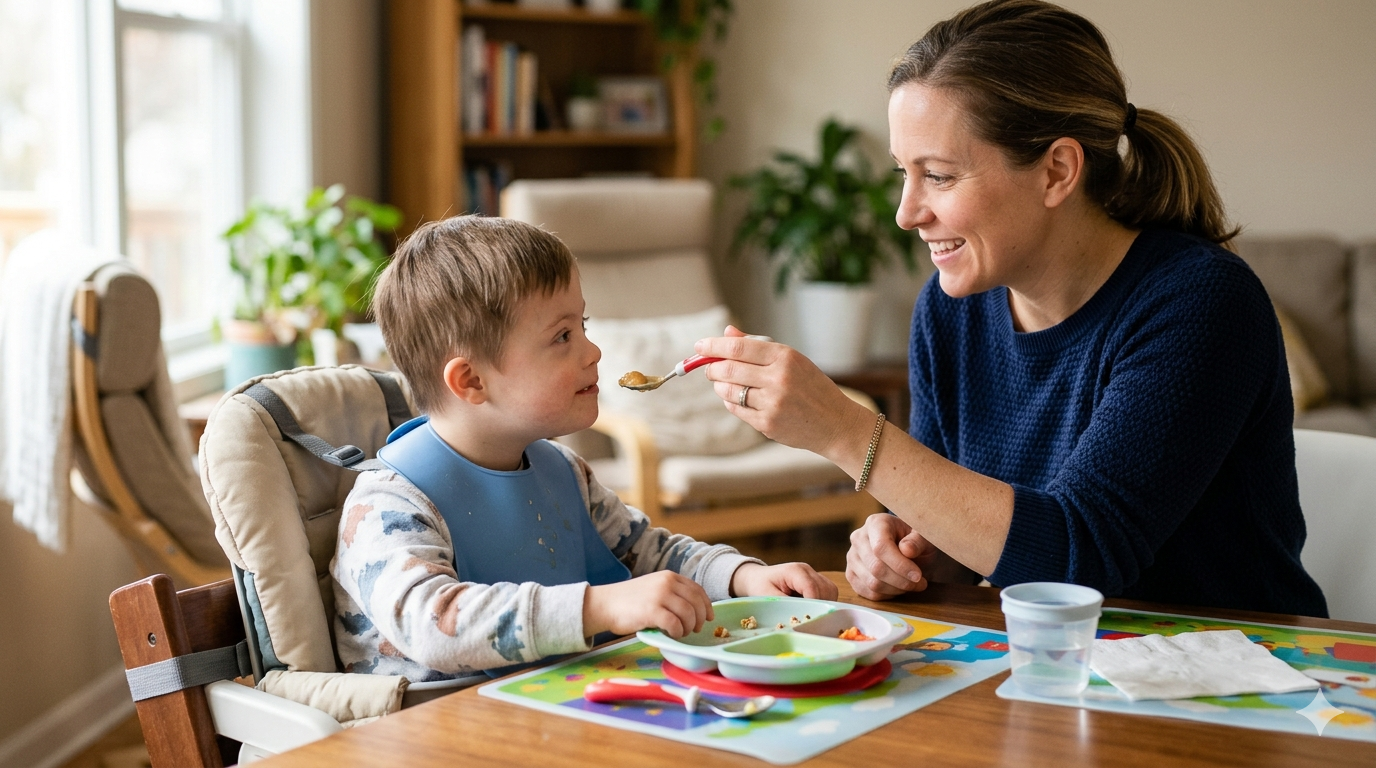
Finding the right feeding assistance for children with special needs can make a world of difference for a tired family.
Caring for a child with special needs is hard work. We acknowledge the immense challenges parents of children with special needs face. You are doing an incredible job, and we validate your hard work and your need for a helping hand.
Mealtime should be a quiet, nourishing moment. Instead, for many parents, it feels like a constant source of stress. You might be managing complex swallowing difficulties or specialized G-tube schedules. You are carrying a heavy load.
Our goal is to make families feel they are no longer alone and have found a trustworthy partner. We want to help you understand your in-home care options.
Finding the right support can reduce anxiety and build confidence.
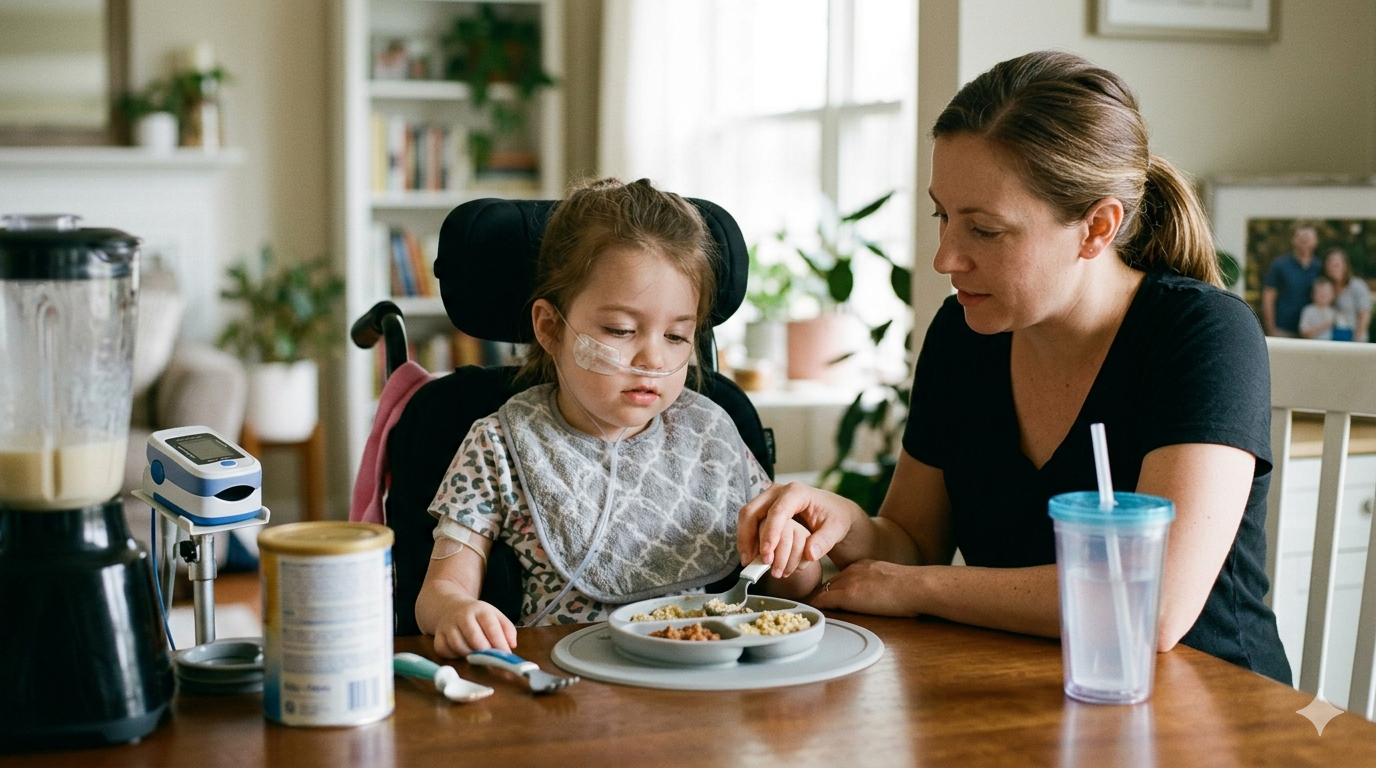
Eating involves complex medical, developmental, and physical factors. Many children with special needs face physical limitations that make eating difficult or dangerous.
Conditions like dysphagia mean food or liquid can enter the airway. Oral motor dysfunction makes chewing and swallowing exhausting.
Some children rely entirely on specialized equipment to receive their daily nutrition safely. The child's brain might process sensory information differently, making certain textures or smells highly distressing.
Every meal carries a risk for a medically fragile child.
A wrong texture or an incorrect position can cause an emergency. You are responsible for managing all of this while handling medications, therapies, and your household.
Feeding assistance covers a wide spectrum of care. It ranges from supervision and positioning support to specialized tube feeding and nutrition monitoring.
Partnering with Services Offered From Above (SOFA) gives you professional, reliable support. We provide licensed professionals, skilled nurses, and compassionate caregivers to support your family.
Our team handles proper positioning to reduce aspiration risks. They manage texture modification and safe food preparation. They carefully pace meals to prevent your child from getting fatigued.
Activities of Daily Living (ADLs) are a core part of our service. Examples of ADLs include bathing, dressing, toileting, and mobility assistance.
A child may need positioning support before feeding, assistance with oral hygiene afterward, and help with mobility throughout the day. We are more than a healthcare provider; we are partners who care for the entire household.
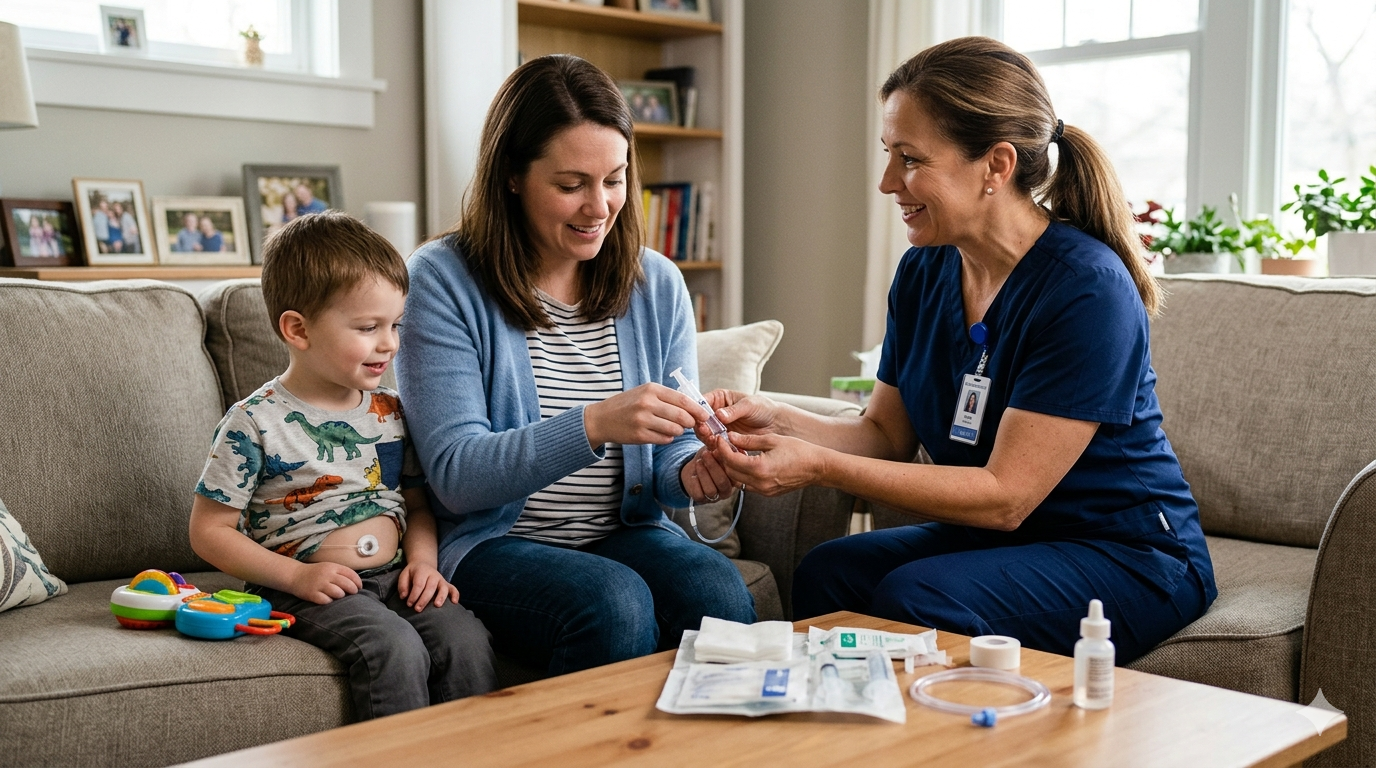
For children who receive nutrition through a gastrostomy tube, the stakes are high. Proper tube feeding requires strict, sterile techniques to prevent infections.
Caregivers must accurately measure formula and administer medications. They flush the tube properly to maintain it. They monitor the site for complications like blockages or skin irritation.
Having a licensed professional share this responsibility reduces risks. It gives you the breathing room you deserve.
You might be wondering how to afford this level of support. The Georgia Pediatric Program (GAPP) is a Medicaid-funded service that allows qualified families to receive in-home care at no out-of-pocket cost.
If you live in Georgia and your child receives Medicaid, you may be eligible for these services. We serve families in Fulton, Cobb, Gwinnett, DeKalb, Henry, Douglas, Rockdale, Fayette, and Barrow counties.
Our team will explain the GAPP program and our services in a way that is easy to understand. You can get the help your family needs fully covered by Medicaid.
Sensory food aversions often stem from neurological differences in how the brain processes stimuli. A child might have heightened sensitivity to the smell, texture, or temperature of food, making the act of eating feel physically uncomfortable or unsafe.
A G-tube (gastrostomy tube) is surgically placed directly through the abdomen into the stomach for long-term feeding. An NG-tube (nasogastric tube) is inserted through the nose and down the esophagus into the stomach, typically used for short-term nutritional support.
Yes. Licensed in-home nurses are qualified to safely measure, prepare, and administer prescribed medications, whether given orally or through an enteral feeding tube, ensuring accurate dosage and timing.
Skilled pediatric caregivers are trained in specialized CPR and airway clearance techniques for medically fragile children. They know exactly how to intervene safely and stabilize the child while contacting emergency services if necessary.
The Georgia Pediatric Program (GAPP) is specifically designed to support medically fragile individuals who are under the age of 21.
SOFA is a support system built on trust and compassion.
Our brand promise is to be an “extension of your family's care”. We consistently show up not just to perform tasks but to bring comfort, joy, and stability into the home.
You have walked a hard path with courage. It is time to let someone share the weight. Contact Services Offered From Above (SOFA) today to request a free consultation and find out how we can help your family thrive.
Disclaimer: The information we share here is meant to support and guide families. Please remember, it is for informational purposes only and is not a substitute for professional medical advice from your child's doctor. Always consult a qualified healthcare provider with any questions about a medical condition, as they know your child's specific needs best. If you are experiencing a medical emergency, call 911 immediately.