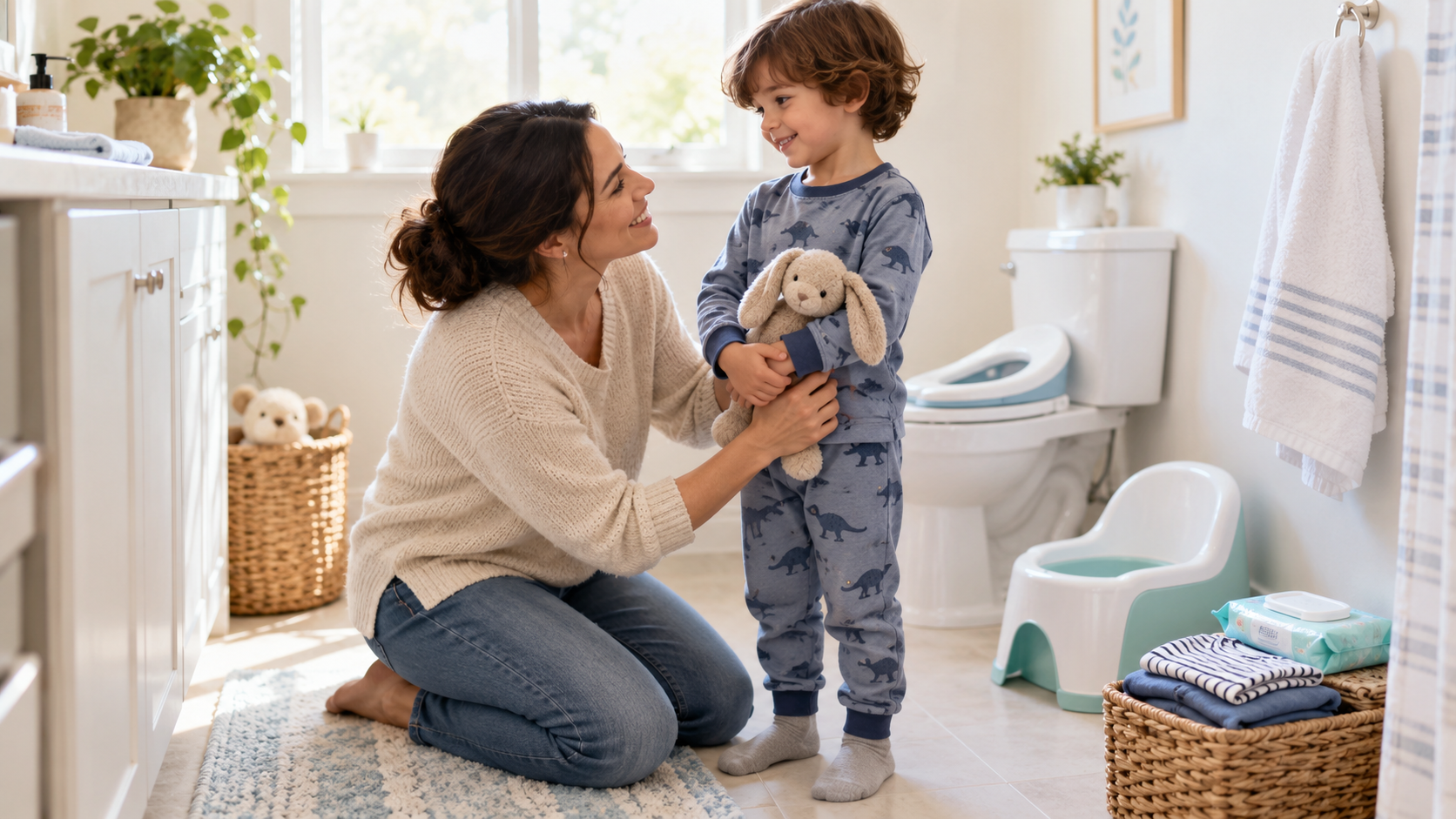
Caring for a child with special needs is hard work, and your days may already be filled with medical visits and therapies.
Among these tasks, managing incontinence care and toileting assistance for children is one of the most personal and intimate challenges you face. While it is rarely talked about in public, the emotional weight of this care can feel isolating for both you and your child.
We believe this support is about much more than just staying clean; it is about protecting your child’s sense of self.
When a child is handled with gentleness and respect, they carry that confidence into every other part of their day.
This guide is here to help you navigate these routines with a focus on heart, health, and the relief your family deserves.
Most medical guides focus only on the physical steps of hygiene.
While those steps matter, they often miss the human side. Children are very perceptive. They can feel when a caregiver is rushed or stressed.
When incontinence care and toileting assistance for children become a source of tension, your child might absorb that anxiety.
This isn’t because you are doing a bad job. It’s because providing this level of care every single day is exhausting. Realizing that you need a helping hand isn't a sign of weakness. It’s a sign that you want the best for your child.
Dignity isn't simply a clinical term. In your home, it looks like small, meaningful choices that build a sense of control:
Properly managing incontinence care and toileting assistance for children is vital for preventing skin issues and infections. For medically fragile children, a small irritation can quickly become a bigger problem.
Moisture is the enemy of healthy skin. According to the Mayo Clinic, keeping skin dry and using barrier ointments are the best ways to prevent breakdown.
Children with special needs can be at a higher risk for Urinary Tract Infections (UTIs).
Research from the American Academy of Pediatrics emphasizes that proper wiping, always from front to back, is the simplest way to reduce the risk of bacterial contamination.
Watch for signs like unusual fussiness or changes in urine color.
There is a lot of pressure on parents to reach "independence" milestones. But for many children with neurological or physical differences, the journey looks different.
Some children may always need help with their personal care. That is okay.
Instead of focusing on "fixing" the situation, focus on making the routine comfortable and sustainable. Success might mean your child communicating their needs more clearly or simply staying comfortable throughout the night.
You weren't meant to do everything alone. That’s why we see ourselves as an extension of your family’s care. We don't simply perform tasks; we bring stability and peace of mind into your home.
Our team of skilled nurses and licensed professionals is trained to provide incontinence care and toileting assistance for children with deep compassion. We take the time to learn your child’s specific cues and preferences.
Through the Georgia Pediatric Program (GAPP), many families in counties like Fulton and Gwinnett qualify for this professional in-home care at no out-of-pocket cost. This Medicaid-funded program allows you to step back from being the "sole provider" and return to being a parent.
Explore the full range of our caregiver services to see how we can support your household.
A solid routine reduces anxiety for everyone.
For more tips on keeping your child comfortable, visit our bathing and personal care page.
Every child is different. Instead of looking at age, look at physical readiness and their ability to follow simple steps. If your child has significant medical needs, the goal might be "management" rather than "independence," and that is perfectly fine.
It is best to use products specifically designed for youth rather than small adult sizes. Youth-specific briefs provide a better fit, preventing leaks and protecting skin integrity.
Preparation is key. Have all your supplies, wipes, creams, and clean clothes within arm's reach before you start. Taking the "scramble" out of the process helps you stay calm, which in turn helps your child stay calm.
In Georgia, programs like GAPP or standard Medicaid often cover incontinence supplies like diapers or pull-ups for children over the age of three who have a documented medical necessity.
We recommend creating a simple "cheat sheet." List the words your child uses, things they like, and things they dislike. This helps our SOFA caregivers provide seamless care from day one.
Yes, it is very normal. Providing personal care is physically and emotionally taxing. Reaching out for support from a program like GAPP is a wonderful way to ensure your child gets the best care while you get a chance to breathe.
You have shown incredible strength in caring for your child. But even the strongest parents need a team. If you live in Fulton, Cobb, Gwinnett, or other surrounding Georgia counties, we are here to walk beside you.
Our goal is to bring a sense of calm and safety back to your household. Whether you need help with incontinence care and toileting assistance for children or other daily needs, our compassionate caregivers are ready to help.
Stop carrying the weight of 24/7 care alone. Contact our team today or fill out a request form to see if your family qualifies for no-cost, expert support through GAPP. You deserve the peace of mind that comes with a trusted partner.
Disclaimer: The information we share here is meant to support and guide families. Please remember, it is for informational purposes only and is not a substitute for professional medical advice from your child's doctor. Always consult a qualified healthcare provider with any questions about a medical condition. If you are experiencing a medical emergency, call 911 immediately.