Caring for a child with special needs is hard work, and we know you pour your heart into every moment.
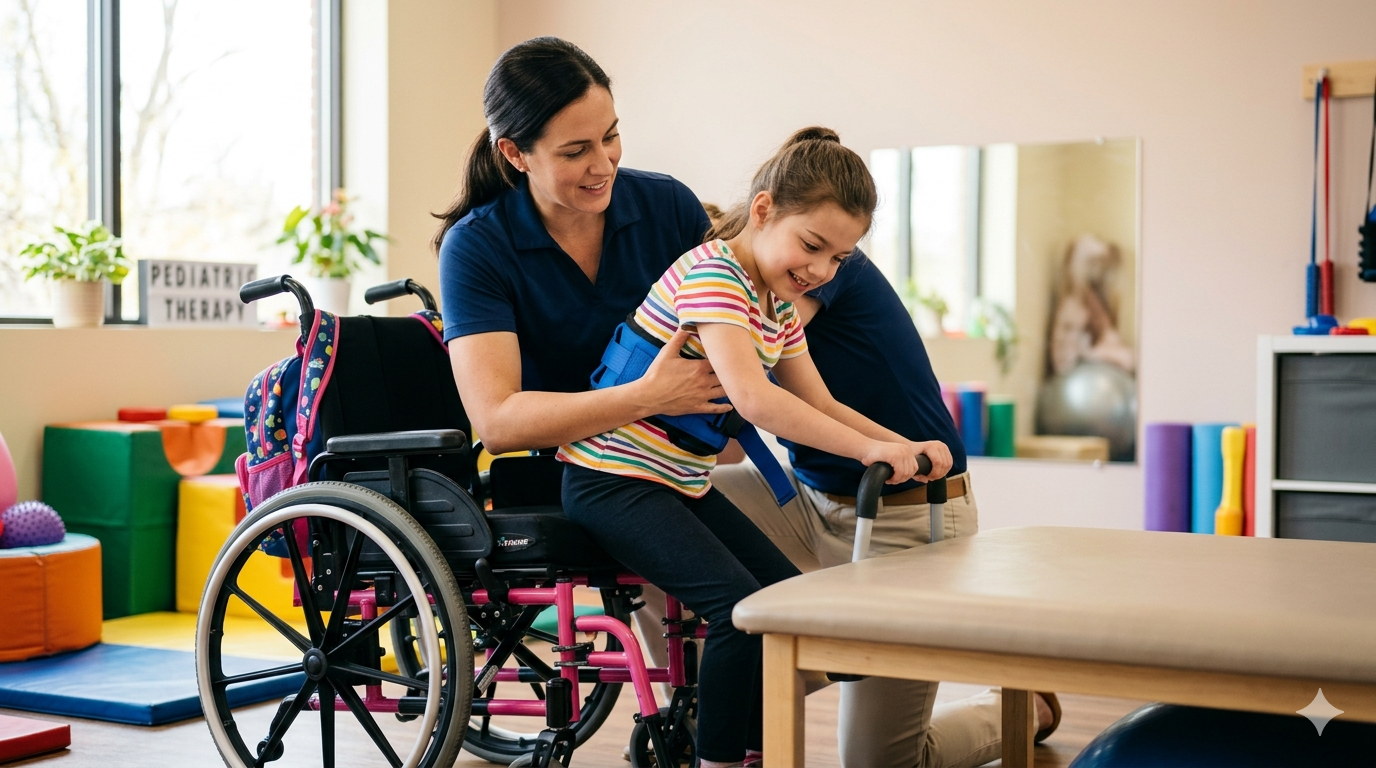
Transfer assistance for children with mobility needs is a vital part of that care, even if it often feels like just another task in your busy day.
You likely lift your child dozens of times daily.
From the bed to the wheelchair or from the car seat to the house, these movements add up. We understand that these moments are invisible to most, but they carry a heavy weight for you.
Your body has limits, and acknowledging that is not a sign of weakness.
It is an act of love for your child. If you are constantly pushing through back pain or shoulder strain, you are risking your ability to be there for them long-term.
Many families find that transfer assistance for children with mobility needs is the key to staying healthy. It isn’t about replacing the care you provide. Instead, it is about making sure every lift is safe for both you and your little one.
A common myth is that you just need to be “strong enough” to lift your child. In reality, safe movement is about body mechanics and planning.
According to OSHA guidelines on safe patient handling, using proper techniques and equipment can reduce caregiver injuries by over 40%.
When a transfer is rushed, the risk of a fall or a muscle tear increases.
This is especially true if your child has unpredictable movements or low muscle tone. Professional support ensures that these transitions happen calmly and securely.
When a caregiver gets hurt, the entire family feels the impact.
Back injuries are incredibly common, but chronic pain in the wrists and hips also develops over time. We want to help you avoid the moment when you can no longer lift your child.
Improper movement can also hurt your child. It might cause skin tears, joint discomfort, or even emotional distress.
When a child feels unstable during a move, they may become anxious, making the next transfer even harder. Safe transfer assistance for children with mobility needs creates a sense of stability and relief for everyone.
At Services Offered From Above (SOFA), we look at the big picture of your home. Effective support includes:
We know that even when you know the right techniques, exhaustion can get in the way. When you are tired and rushed, it is easy to take shortcuts.
This is where professional in-home care makes a world of difference.
Our team of licensed professionals and skilled nurses can step in to handle the physical heavy lifting. This gives you the physical relief you deserve.
It also allows you to focus on simply being a parent while we handle the technical side of care.
You might worry about the cost of bringing a professional into your home. The good news is that for many, there are no out-of-pocket costs.
The Georgia Pediatric Program (GAPP) is a Medicaid-funded service.
It allows qualified families with children under 21 to receive in-home care that is fully covered by Medicaid.
This program is designed for children with significant medical needs or disabilities, providing the extra hands you need to keep your home running smoothly.
While you wait for professional support, keep these safety principles in mind:
Common tools include gait belts for stability, slide boards for seated transfers, and mechanical lifts (like Hoyer lifts) for children who cannot support their own weight. Your physical therapist can help determine which tool is safest for your child's specific medical needs.
Start by clearing wide paths through the main living areas and removing rug hazards. Ensure that the surfaces where transfers occur, such as the bed or bath, are at a comfortable height for the caregiver to prevent unnecessary bending.
While siblings often want to help, manual lifting should generally be left to adults or trained professionals. Siblings can play a wonderful role by clearing obstacles, holding doors, or providing emotional comfort to their brother or sister during the move.
On days when spasticity or muscle tension is high, transfers can be more difficult. Take it slow, use soothing communication, and ensure their body is properly aligned before starting. If a move feels unsafe due to their tension, pause and wait for them to relax or seek an extra pair of hands.
Even if your child doesn't use words, they understand your energy and tone. Use a calm voice, maintain eye contact, and use consistent physical cues (like a gentle pat on the shoulder) to signal that a move is about to begin. Predictability reduces their anxiety and makes the move smoother.
To protect skin health and prevent pressure sores, it is generally recommended to change your child's position at least every two hours. This includes small shifts in their chair or full repositioning in bed. Our compassionate caregivers can help manage this schedule throughout the day.
At Services Offered From Above (SOFA), we are more than just a provider; we are an extension of your family.
Our founder, Angela Mains, started this mission out of genuine passion for helping families like yours find peace of mind.
We serve families in Fulton, Cobb, Gwinnett, DeKalb, Henry, Douglas, Rockdale, Fayette, and Barrow counties. If you are feeling the physical strain of daily care, please know you don’t have to do this alone.
Contact us today to see how we can support your family’s unique needs. You can also learn more about our team and our commitment to compassionate care.
Disclaimer: The information we share here is meant to support and guide families. Please remember, it is for informational purposes only and is not a substitute for professional medical advice from your child's doctor. Always consult a qualified healthcare provider with any questions about a medical condition, as they know your child's specific needs best.
If you are experiencing a medical emergency, call 911 immediately.