
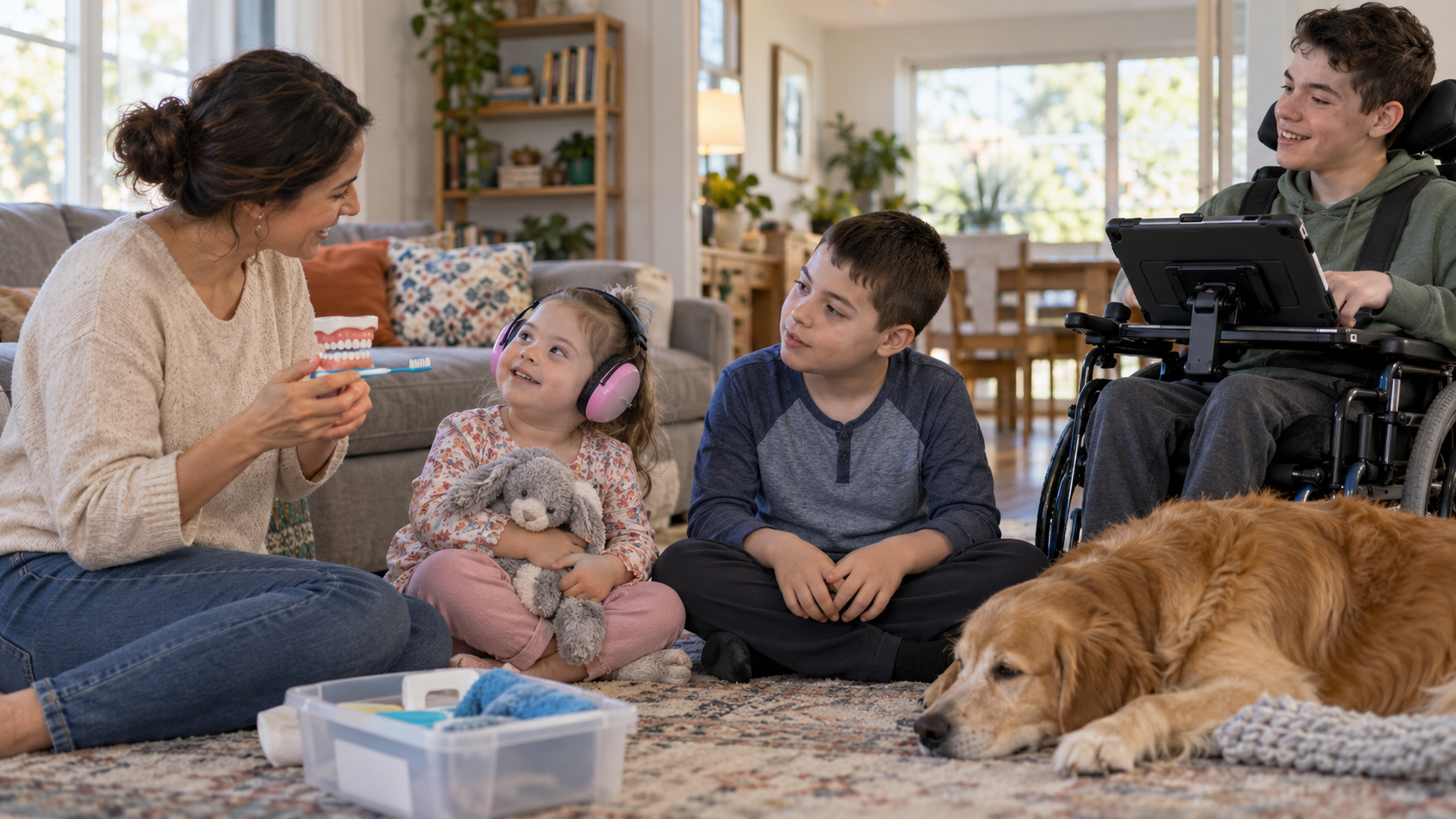
You have finished the paperwork, you’ve scheduled the first visit, and a new caregiver is coming next Tuesday.
Now comes the part that often feels the heaviest: talking to your child…
If you are reading this, you are likely searching for the right words. You might worry that your child will feel scared or confused.
You may even feel a little guilty, wondering if they will think you are stepping back.
The truth is, there is no perfect script. What works is meeting your child exactly where they are.
This guide will help you navigate explaining home care to children with special needs by focusing on your child’s comfort and your family's peace of mind.
Before finding the words, it helps to acknowledge your own feelings. Arranging care through the Georgia Pediatric Program (GAPP) is a wise choice for your family's stability.
Children often pick up on our hidden tension. If you feel uncertain, they might mirror that anxiety.
Ask yourself: What does this care provide for our home?
When you view a caregiver as a partner who brings joy and relief, your child is more likely to see them that way, too.
Your child's developmental stage changes how they process new information.
Here is how to tailor your approach.
Little ones live in the moment. Instead of a long talk, focus on concrete activities.
Children this age want to know the "why" behind changes. They are concrete thinkers who value honesty.
Teens often value independence. Introducing home care can sometimes feel like a loss of control.
Sometimes a child seems fine, but processes their feelings internally. Watch for small changes in sleep, appetite, or mood. These are normal reactions to a new routine.
Building a caregiver relationship takes patience.
At Services Offered From Above (SOFA), we believe in moving at your child's pace. Help the transition by sharing what matters most. Does your child have a favorite toy? Do they use specific phrases for Activities of Daily Living (ADLs), like getting dressed or using the bathroom?
Sharing these details helps our compassionate caregivers connect with your child as a person, not just a patient.
Most families find a rhythm within a few weeks. However, children with developmental or physical disabilities may need longer to adjust.
This is not a failure. It is simply a sign that we need to listen more closely to their needs. We are here to walk beside you and adjust our approach whenever necessary.
This is often just a fear of the unknown during the initial adjustment to care.
We suggest "parallel play," where the caregiver does an activity near your child without forcing them to join.
Most children eventually become curious and begin to engage on their own terms as they get more comfortable with the new routine.
Having you nearby is a great way to prioritize child comfort as they get used to a new face.
You can start in the same room, then move to another part of the house, and eventually run a short errand once your child builds confidence and feels secure with their caregiver.
You don't need medical jargon. Focus on the help being provided. Explain that the "helper" is there so the child has more energy to play, and you have more time to spend together.
GAPP is a Medicaid-funded service. This means qualified families can receive this vital in-home care at no out-of-pocket cost.
It is natural to feel a little sting, but this is actually a wonderful sign! It means your child feels safe and happy. Your bond as a parent is unique and can never be replaced.
At SOFA, we only hire licensed professionals and skilled nurses who pass rigorous background checks and share our mission of sincere, faith-inspired care.
Building a bond is a personal process, and sometimes the "vibe" just isn't right. If you or your child doesn’t feel a connection after a fair adjustment period, please speak up.
We prioritize your child’s comfort and emotional safety above all else, and we will work with you to find a professional whose personality and style better align with your family's needs.
It is completely normal for children to express their big feelings through behavior when their routine changes.
Instead of feeling embarrassed or rushed, take a deep breath. Our caregivers are trained to handle these moments with patience and calm.
Usually, once the transition happens and you are out of sight, the "storm" passes quickly. We are here to support both of you through those rocky starts.
Absolutely. We see your child as an individual, and that includes how they share their world with us.
During our first meeting, we encourage you to show us exactly how your child uses special needs communication, whether it’s through an AAC device, specific signs, or even unique body language.
Our goal is to meet them where they are so they feel heard and understood from day one.
The fact that you are thinking about how to handle this conversation shows how much you care. You don’t need to be perfect; you just need to be there.
We see ourselves as an extension of your family. Our goal is to bring stability, relief, and joy back into your home.
If you are ready to explore how we can offer family support to your household in Fulton, Cobb, or surrounding counties, we would love to talk.
Learn more about our compassionate services, and when you’re ready to take the next step, fill out our request form, and let’s discuss how we can walk beside you.
Disclaimer: The information we share here is meant to support and guide families. Please remember, it is for informational purposes only and is not a substitute for professional medical advice from your child's doctor. Always consult a qualified healthcare provider with any questions about a medical condition, as they know your child's specific needs best.
If you are experiencing a medical emergency, call 911 immediately.